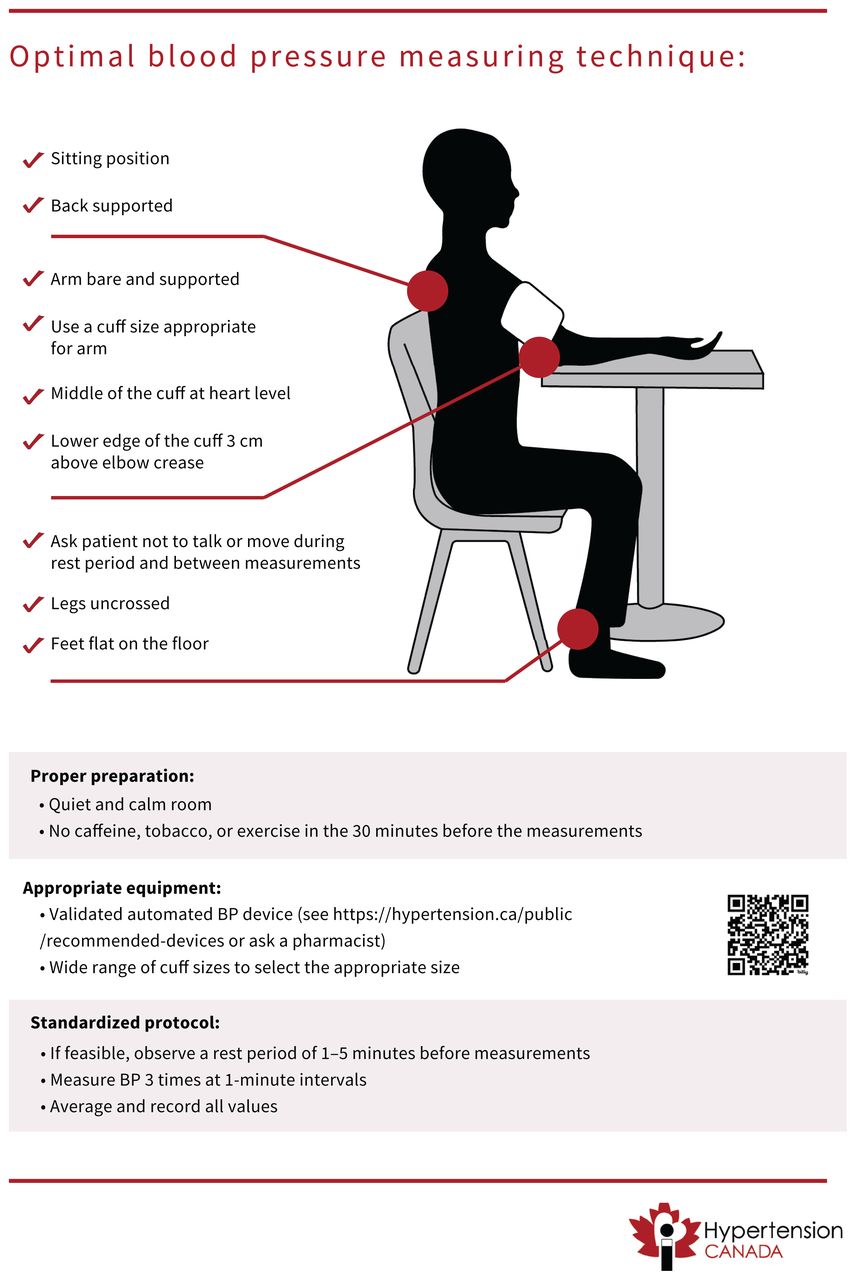
Home blood pressure readings help your clinician understand your usual blood pressure and see how well treatment is working. Good technique matters: small changes in position or timing can change the result.
Choose the right monitor
Use an automatic upper-arm monitor that appears on Hypertension Canada’s recommended devices list. Make sure its cuff fits your arm; follow the manufacturer’s sizing guide. Bring your monitor and cuff to an appointment about once a year to check the device and your technique. If an upper-arm cuff cannot be used, ask your clinician or pharmacist which device is suitable.
Before you measure
Follow the schedule your clinician gave you. A common schedule is morning and evening for seven days, especially before an appointment or after a medication change.
For one hour beforehand, do not smoke or drink caffeine. Avoid exercise for 30 minutes beforehand.
Empty your bladder if needed. Put the cuff on bare skin, not over clothing.
Sit quietly for five minutes before starting.
Take the readings
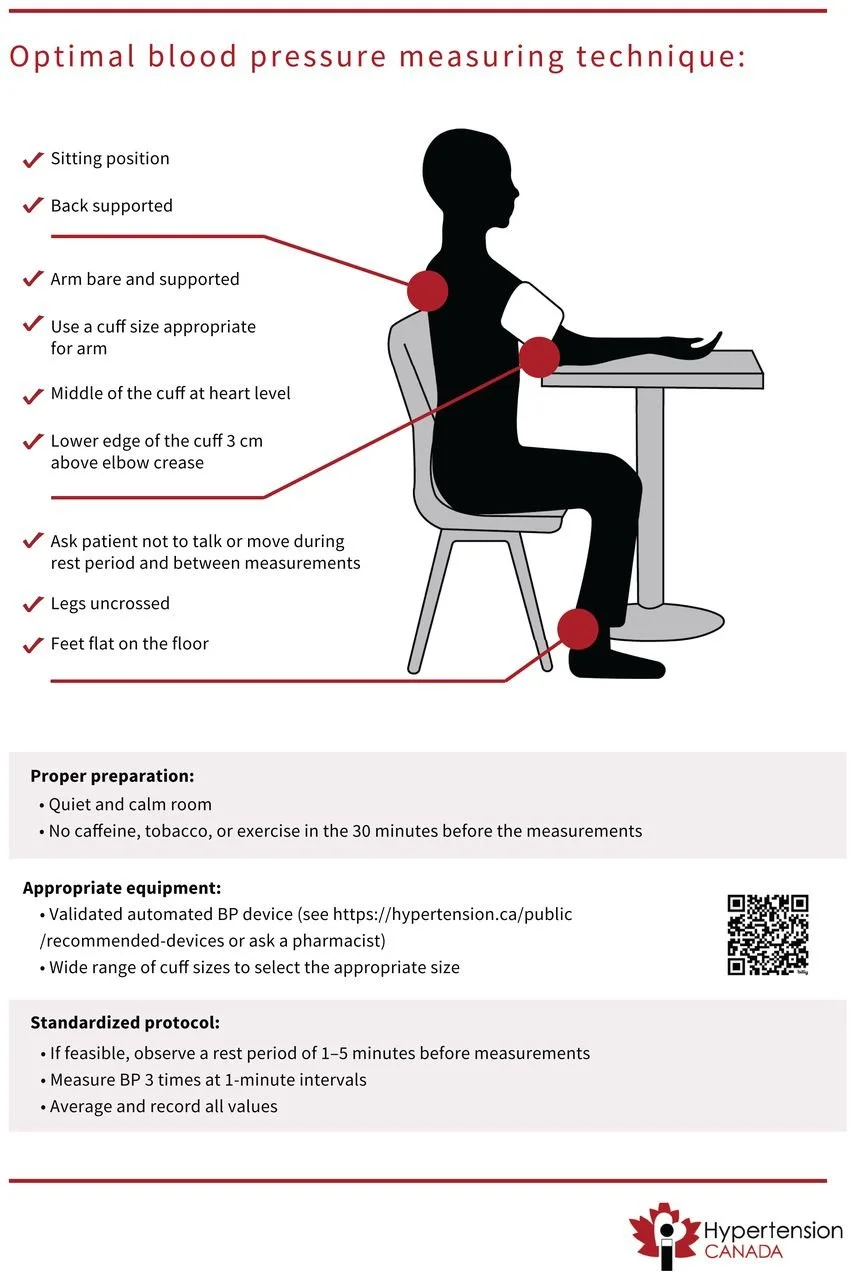
View Hypertension Canada’s diagram of optimal blood pressure measuring technique.
Sit with your back supported, both feet flat on the floor and legs uncrossed.
Rest your bare arm on a table so the cuff is at heart level.
Keep still and do not talk, text or watch television during the measurement.
Take two readings, one minute apart. If your clinician asked for three, leave one minute between readings and use the second and third.
Record the readings used for your log. For a seven-day record, the usual average excludes the first day; follow different instructions from your clinician.
Use the same arm and similar times each day unless told otherwise. Do not round numbers or record only the reading you prefer.
Record and share your results
Write down the date, time, top number, bottom number and pulse. Note symptoms or unusual circumstances, such as a missed dose. Download Hypertension Canada’s home blood pressure log. Bring your log and monitor to appointments.
Printable patient handout
How to Take Blood Pressure at Home and How to Lower Your Blood Pressure — a two-page FMPE handout from the Hypertension in Adults module (August 2021).
Reading routines: The handout asks for three readings each time and uses the last two. Hypertension Canada’s standard home routine asks for two. Both are valid; follow the routine your clinician recommends. For a seven-day average, usually leave out the first day.
Your target depends on your health and how your blood pressure was measured. Ask your clinician what range is right for you. One unusual reading does not by itself diagnose high or low blood pressure. Do not change medication based on one reading unless a clinician has given you a specific plan.
Alcohol and blood pressure
Drinking less alcohol can help lower blood pressure. Canada’s current alcohol guidance says less is better: no alcohol avoids alcohol-related health risks, and one or two standard drinks a week is considered low risk. Risk rises with more drinking. If you drink, avoid more than two drinks on any one day. Ask your clinician for support if you want to cut back.
The printable handout uses an older daily drinking limit. Use the newer weekly guidance above when deciding how much to drink.
When to contact Markham Medical Centre
Book an appointment or follow your clinician’s plan if readings are repeatedly outside your personal target; you feel dizzy, faint or weak, especially after a medicine change; your monitor repeatedly shows an irregular-heartbeat symbol; or you are unsure about your device, cuff or technique. Pregnancy, an irregular heart rhythm and some medical conditions may change how readings are taken or interpreted. Ask for individual advice.
When to seek urgent or emergency care
If a reading is unexpectedly high or low and you have no new symptoms, sit quietly for five minutes and repeat it. If still unusual, contact your clinician promptly or call Health811 at 811. Do not take extra medicine or skip a dose unless instructed.
Call 911 right away for signs of stroke (drooping face, arm weakness or numbness, slurred speech), chest pressure or pain, severe shortness of breath, or loss of consciousness. Do not wait for another reading.
Sources and further reading
Editorial record
Clinical reviewer: Dr. Emilie Lam
Original publication date: November 16, 2026
Last clinical review date: November 15, 2026
MMC Health Articles provide general patient education. They are not a diagnosis or a substitute for care from a health-care professional who knows your medical history.